















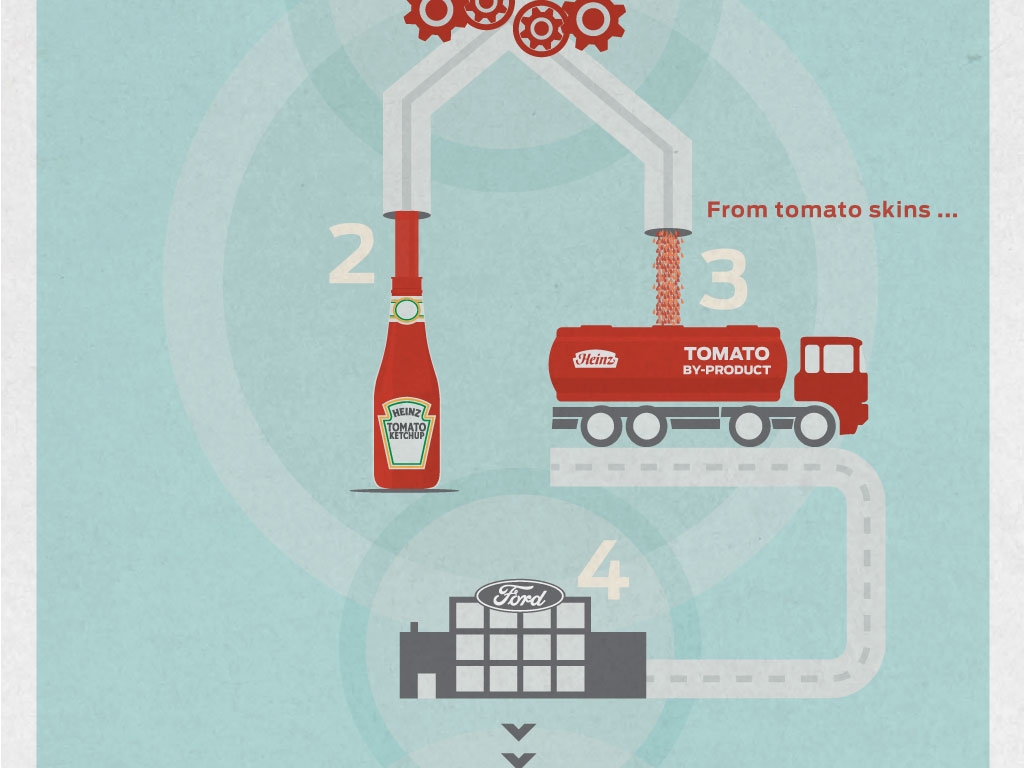
Desde hace dos años, los investigadores de Ford y Heinz están investigando el uso de fibras de tomate en el desarrollo de materiales sostenibles para su uso en la fabricación de vehículos. La piel del tomate seca podría convertirse en un futuro en el recubrimiento del cableado o en compartimentos para guardar monedas y otros objetos pequeños en los coches Ford.
"Nuestro objetivo es desarrollar un material fuerte y ligero que cumpla con las necesidades de los vehículos, mientras se reduce el impacto medioambiental global." Los investigadores buscan desarrollar un plástico de origen 100% vegetal, que pueda ser empleado en todo el vehículo, desde la tela hasta el envasado y con un menor impacto ambiental que los materiales de embalaje a base de petróleo que se emplean actualmente."Aunque estamos en las primeras etapas de la investigación, y quedan muchas preguntas, estamos entusiasmados con las posibilidades que esto podría producir".
El compromiso de Ford para reducir, reutilizar y reciclar es parte de la estrategia global de la compañía para reducir su huella ambiental. En los últimos años, Ford ha aumentado el empleo de materiales no metálicos y de base biológica reciclados, como la celulosa fibra-reforzada empleada en componentes de la consola y capuchas de cáscara de arroz empleados en el sistema eléctrico, así como materiales compuestos logrados a partir de cocos, algodón reciclado para las alfombras y asientos de tela o los cojines y reposacabezas de espuma de soja.

















 14 Sep.25